How to Become a Pilot in Austin, Texas: A Complete 2026 Guide
Austin, Texas, is one of the best places in the country to learn to fly. With over 300 days of flyable weather per year, a thriving aviation community, and proximity to Austin-Bergstrom International Airport (KAUS) and dozens of general aviation fields, aspiring pilots here have every advantage.
If you’ve been thinking about earning your pilot’s license, this guide walks you through the entire process — from your first phone call to a flight school through the day you pass your checkride.
Step 1: Decide Why You Want to Fly
Before you invest time and money, it helps to clarify your goal. Are you flying for fun on weekends? Building toward a career with the airlines? Want to fly yourself on business trips?
Your motivation shapes the path. A recreational pilot might stop at the Private Pilot Certificate. A career-track student will continue through Instrument Rating, Commercial Pilot, and possibly CFI (Certified Flight Instructor) and Multi-Engine ratings.
At John Doe Academy, we start every prospective student with a conversation about goals — because training should be built around your life, not the other way around.
Step 2: Get Your Medical Certificate
Before you solo an aircraft, you’ll need an FAA medical certificate. This is issued by an Aviation Medical Examiner (AME) — a doctor authorized by the FAA to evaluate pilots.
There are three classes of medical certificates:
- Third Class — Required for Private Pilots. Valid for 5 years if under 40, 2 years if over 40.
- Second Class — Required for Commercial Pilots. Valid for 1 year.
- First Class — Required for Airline Transport Pilots. Valid for 1 year (6 months if over 40).
Most student pilots start with a Third Class medical. The exam covers vision, hearing, cardiovascular health, and general fitness. Corrective lenses are perfectly acceptable.
Austin has several AMEs in the metro area. We recommend scheduling your medical exam early — it confirms you’re medically eligible before you commit financially.
Step 3: Choose a Flight School
Not all flight schools are created equal. When evaluating schools in Austin, consider:
- Fleet condition and avionics — Are the aircraft well-maintained? Do they have modern glass cockpits (like the Garmin G1000) alongside traditional steam gauges?
- Instructor quality — How experienced are the CFIs? Are they building hours for the airlines, or are they career instructors who genuinely love teaching?
- Scheduling flexibility — Can you fly when it works for you, including evenings and weekends?
- Completion rates — What percentage of students actually finish their certificates?
- Community — Does the school feel welcoming? Aviation is as much about people as it is about airplanes.
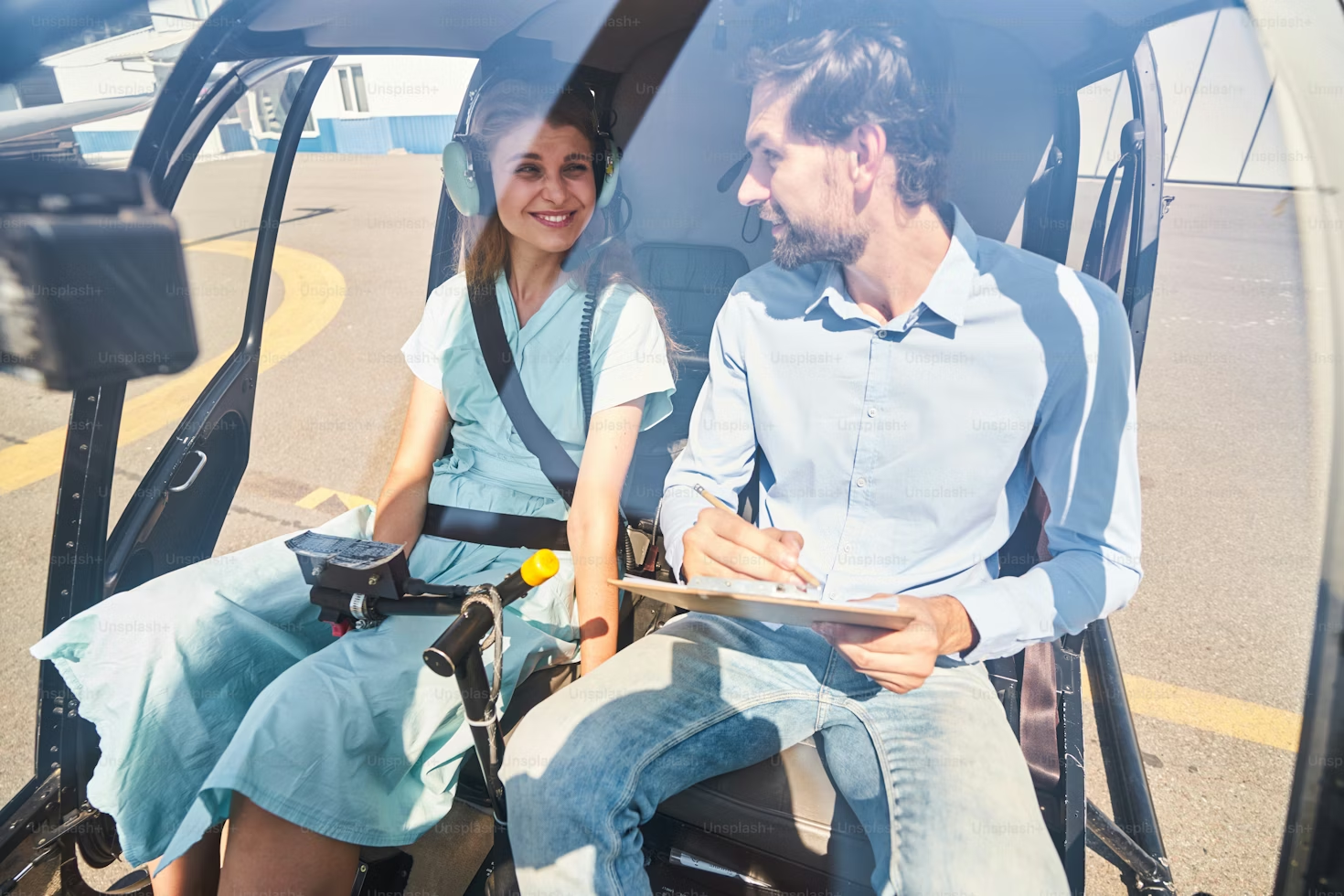
A discovery flight is the best way to evaluate a school firsthand. You’ll meet an instructor, see the aircraft, and actually fly — all for a couple hundred dollars.
Step 4: Begin Ground School
Ground school covers the theoretical knowledge you’ll need to pass the FAA Knowledge Test (the “written exam”) and to be a safe, competent pilot. Topics include:
- Aerodynamics and principles of flight
- Weather theory and interpretation
- Navigation (charts, GPS, VORs)
- Federal Aviation Regulations (FARs)
- Aircraft systems and performance
- Human factors and aeronautical decision-making
Ground school can be completed through in-person classes, self-study with books and apps, or online courses. Many students use a combination. Popular study tools include Sporty’s, King Schools, and the Gleim FAA Knowledge Test prep.
You’ll want to pass your knowledge test before your checkride, and most instructors recommend taking it about halfway through your flight training.
Step 5: Log Your Flight Hours
The hands-on part. Under FAA Part 61, you need a minimum of 40 hours of flight time to earn your Private Pilot Certificate, though the national average is 60–70 hours.
Your training will include:
- Pre-solo training — Takeoffs, landings, basic maneuvers, slow flight, stalls, and emergency procedures.
- Solo flights — After your instructor signs you off, you’ll fly alone. Your first solo is one of aviation’s most unforgettable milestones.
- Cross-country flying — Flights to airports at least 50 nautical miles away, practicing navigation and flight planning.
- Night flying — A minimum of 3 hours of night training, including 10 nighttime takeoffs and landings.
- Instrument training — 3 hours of flight by reference to instruments under simulated conditions.
Austin’s airspace offers great variety — from towering Class B airspace around KAUS to quiet Class G fields perfect for practicing maneuvers. This real-world complexity is an advantage: you’ll graduate as a more capable pilot.
Step 6: Pass Your Checkride
The checkride is a two-part practical exam conducted by an FAA Designated Pilot Examiner (DPE). It consists of:
- Oral exam — A conversation (typically 1–2 hours) where the examiner tests your knowledge of weather, regulations, systems, and aeronautical decision-making.
- Flight exam — You’ll demonstrate maneuvers, navigate to a destination, and handle simulated emergencies.
If you’ve trained well and your instructor has prepared you, the checkride is a culmination — not a surprise. At John Doe Academy, we don’t send students to their checkride until they’re ready.
What It Costs
Total cost for a Private Pilot Certificate in Austin typically falls between $12,000 and $18,000. This includes:
- Aircraft rental (wet rate): $150–$200/hour
- Instructor fees: $60–$80/hour
- Ground school materials: $200–$500
- FAA Knowledge Test: $175
- DPE Checkride fee: $700–$900
- Medical exam: $100–$200
Financing options exist through aviation-specific lenders and some flight schools offer payment plans. The investment pays for itself many times over — whether in career earnings or in the priceless freedom of flight.
Start Your Journey Today
The best time to start flying was yesterday. The second-best time is today. Austin’s flying weather, active aviation community, and accessible training make it one of the premier locations in the United States to earn your wings.
Book a discovery flight and see for yourself. Thirty minutes in the left seat will tell you more than any article ever could.
Ready to start your aviation journey?
Book a discovery flight and experience Austin from the cockpit.